
© 2024, elvistangwen.com All rights reserved
Best dropshipping niches 2025
In 2025, dropshipping remains a prominent e-commerce model, enabling entrepreneurs to sell products without the necessity of maintaining inventory. This approach provides a low-risk entry point into the online retail sector; however, it also introduces specific challenges that must be navigated. A comprehensive understanding of the dropshipping process and its current landscape is essential for anyone contemplating this business model. This blog will elucidate the dropshipping process and explore its evolution in response to the demands of 2025.
Identifying the best dropshipping niches for 2025 can help entrepreneurs capitalize on emerging trends and consumer demands. Here are some promising niches to consider:
Dropshipping is a retail fulfillment method where a store does not maintain inventory for the products it sells. Instead, when a store sells a product, it purchases the item from a third party—usually a manufacturer or wholesaler—who then ships the product directly to the customer. Here are the key components of dropshipping:
Retailer Setup:
Customer Purchase:
Order Fulfillment:
Profit Margin:
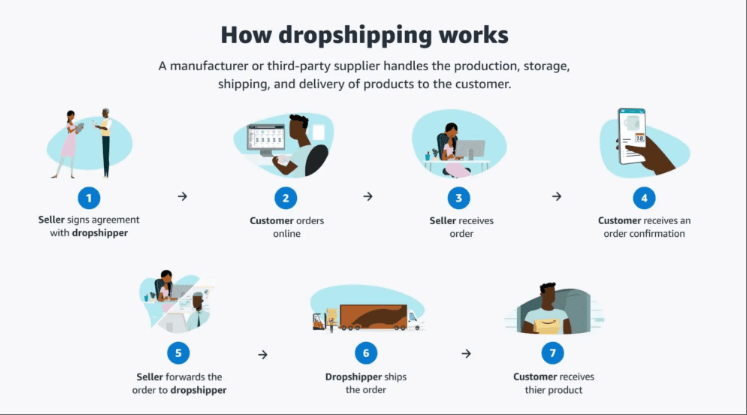
The dropshipping process in 2025 is much more streamlined and automated, making it easier for entrepreneurs to manage their businesses from anywhere in the world. Here’s how it works:
l Customer Places an Order
A customer orders a product through an online store, typically hosted on e-commerce platforms like Shopify, WooCommerce, or BigCommerce. The retailer’s website displays product listings, prices, and product information.
l Retailer Forwards the Order to the Supplier
Once an order is placed, the retailer forwards the order details to the supplier. Many retailers use automated tools that sync their stores with suppliers, eliminating manual data entry. This ensures that orders are sent to the supplier in real time and without errors.
l Supplier Ships the Product
The supplier receives the order and prepares the product for shipping. In 2025, many suppliers, such as CJdropshipping, have global warehouses and can fulfill orders from locations closer to the customer to ensure faster delivery times. The supplier handles all aspects of shipping, including packaging and shipping costs.
l Customer Receives the Product
The customer receives the product at their address, typically within a few days or weeks, depending on the shipping method. The retailer makes their profit by marking up the price of the product from the supplier’s cost.
This process is much faster and more efficient with the help of automation tools. Retailers can integrate their e-commerce store with suppliers, manage inventory in real-time, and track orders seamlessly.
1. Almost No Up-Front Investment
With dropshipping, you never purchase stock until a customer places an order. That means you’re not tying up hundreds—or even thousands—of dollars in products sitting on a warehouse shelf. All you need to get started is a simple website (or a storefront on a marketplace) and a trusted supplier.
2. Zero Storage Hassle
Trying to find room for boxes of merchandise can quickly turn your living room or garage into a makeshift warehouse. Dropshipping frees you from that constraint: your supplier handles packing, storing, and shipping, so you never have to worry about square footage.
3. Effortless Scaling
Want to add ten more products? No problem. Want to double your order volume next month? Your supplier’s fulfillment team scales alongside you. Instead of scrambling to manage more stock, you focus on marketing, customer service, and refining your brand.
4. Vast Product Variety
Because you’re not purchasing bundles of products in advance, you can test out dozens—even hundreds—of items with minimal risk. Seasonal fads, trending gadgets, niche decor pieces—all can live side by side on your site, ready for customers to discover.
5. Work from Anywhere
Whether you’re logging in from a beachside bungalow in Thailand or your favorite coffee shop downtown, all you really need is an internet connection. Orders flow automatically from your site to your supplier, and you’re free to manage emails, ads, and social posts from wherever you choose.
6. Minimized Financial Risk
Traditional “buy-bulk” retail often means you’re on the hook for unsold merchandise. With dropshipping, if a product doesn’t resonate with buyers, you’re not left holding the bag. You simply stop offering it and pivot to something that sells.
7. Focus on Growth Activities
Fulfillment isn’t your worry—customer acquisition is. That shift in focus allows you to pour time and energy into SEO, social-media storytelling, influencer partnerships, and building an unforgettable unboxing experience for your buyers.
8. Seamless Automation Options
Modern e-commerce platforms like Shopify, WooCommerce, and BigCommerce all plug into dropshipping apps that automatically sync inventory, update tracking numbers, and even handle customer notifications. What used to take hours can now be accomplished with a few clicks.
9. Tap into Global Markets
Boundaries vanish when your supplier ships worldwide. You can test which regions respond best to your products, tailor ads for different demographics, and diversify your revenue streams—all without setting up local warehouses or navigating complex import/export hurdles.
10. Safe Testing Ground for New Ideas
Dreaming of your own branded line of products? Dropshipping lets you gauge real market interest before investing in custom molds, packaging design, or large minimum-order quantities. It’s a gentle way to validate concepts, gather customer feedback, and build brand recognition before committing deeply.
1.Low Startup Costs
Unlike traditional retail, dropshipping eliminates the need to invest upfront in inventory. You don’t need a warehouse, and you won’t risk getting stuck with unsold products. All you need is a website (easily built with platforms like Shopify) and a partnership with suppliers. For bootstrapped entrepreneurs, this makes testing business ideas financially feasible.
2.Flexibility and Scalability
With no physical inventory, you can experiment with niche markets or seasonal products without long-term commitments. Want to pivot from selling fitness gear to home decor? Just update your website and partner with new suppliers. This agility reduces the risk of market shifts or trends fading.
3.Location Independence
Dropshipping lets you run a global business from anywhere. Suppliers might be in China, the U.S., or Europe, while your customers could span multiple continents. This model breaks down geographical barriers, allowing you to tap into markets you’d otherwise struggle to reach.
4.Time Efficiency
By outsourcing inventory management and shipping, you free up time to focus on marketing, customer service, and growing your brand. For solopreneurs or small teams, this efficiency can be a game-changer.
1.Razor-Thin Profit Margins
Low barriers to entry mean fierce competition. Many dropshippers resort to slashing prices to stand out, eroding profits. If your supplier also works with competitors, price wars can turn your niche into a race to the bottom.
2.Limited Control Over Quality and Shipping
Your reputation hinges on suppliers you’ve never met. Late deliveries, damaged items, or incorrect orders will anger customers—and they’ll blameyou, not the supplier. Even reliable partners can face stock shortages or shipping delays, leaving you scrambling for solutions.
3.Customer Service Challenges
While you don’t handle shipping, customers will still hold you accountable for every problem: lost packages, returns, defective products. If suppliers are slow to respond, you might have to refund orders out of pocket to protect your brand’s reputation.
4.Branding Limitations
Dropshipping makes it hard to build a distinct brand. Products often arrive in generic packaging, and customers may notice they’re sourced from third parties. Without unique packaging or inserts, fostering loyalty becomes an uphill battle.
5.Hidden Costs
While you save on inventory, other expenses add up. Marketing (especially paid ads), website maintenance, and transaction fees can eat into profits. Many beginners underestimate how much it costs to acquire customers in saturated markets.